Five clear signs your business software is due for a redesign — from user complaints to mobile failures — and what to do about it before it costs you customers.
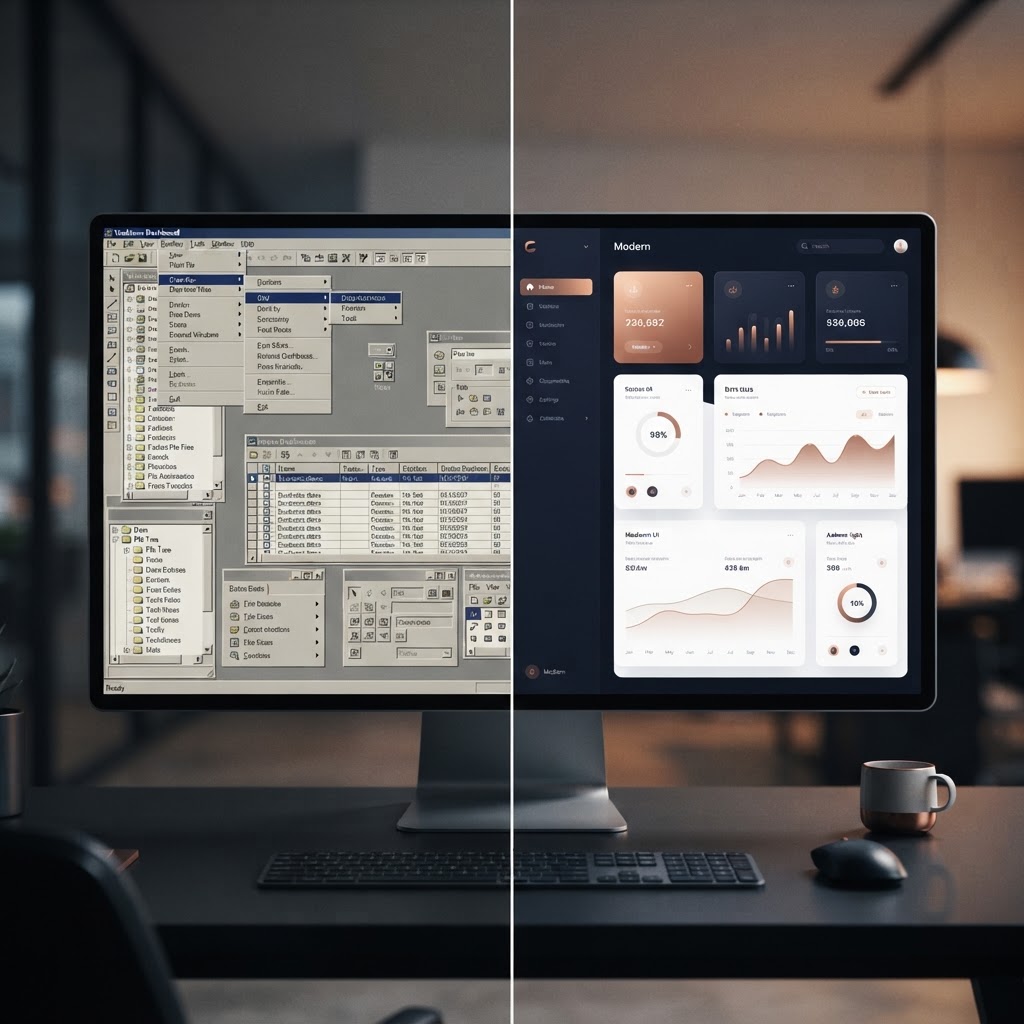
Software ages. Not in the way that wine ages — more like milk. A web application that looked modern three years ago can feel dated, slow, and frustrating today. And while it's tempting to put off a redesign because "it still works," the cost of outdated software compounds quietly until it starts costing you users.
Here are five signs it's time to redesign — before the damage is visible.
1. Your Users Complain About "Simple" Things
When users start complaining about basic tasks — "I can't find the settings," "it takes too many clicks to book a ride," "the form doesn't work on my phone" — that's not a user training problem. That's a design problem.
If your support inbox is full of questions about how to do things that should be obvious, your interface is failing. A redesign focused on simplifying the core user journey will reduce support load, improve satisfaction, and make your product feel professional.
2. It Looks Different on Every Device
If your software looks great on a desktop but falls apart on mobile — or if different browsers render it differently — you have a responsive design problem. In 2026, the majority of your users are likely on mobile devices, and a broken mobile experience signals "we don't care about how you actually use this."
A redesign should start with mobile and scale up, not the other way around. If the mobile experience isn't solid, nothing else matters.
3. You're Embarrassed to Share the Link
This is the most honest test. If you hesitate to share your product URL with a potential client or partner because it "doesn't look great yet," you already know it needs a redesign.
Your software's interface is your brand. When someone lands on your product, the design quality is their first impression of your business. A polished, modern interface builds trust instantly. A dated, clunky one creates doubt.
4. New Features Are Getting Harder to Add
When every new feature requires workarounds, hacks, or compromises because the underlying design system can't accommodate them cleanly, you've hit an architectural ceiling. This is a sign that the design system — the components, patterns, and conventions that make up your interface — needs to be rebuilt.
A proper redesign includes establishing a design system: reusable components, consistent spacing, a defined colour palette, and clear typography rules. This makes future development faster, not slower.
5. Your Competitors Look Better
This isn't about vanity — it's about market reality. If a potential customer compares your product to a competitor and the competitor's interface looks more modern, more intuitive, and more trustworthy, you lose. Not because your features are worse, but because perception matters.
The good news: a focused redesign that targets the highest-impact areas — landing page, core user flow, mobile experience — can close the gap quickly without a full rebuild.
What to Do About It
If any of these signs sound familiar, the next step isn't a complete rewrite. It's a focused redesign:
- Audit the current experience. Identify where users get stuck, where they complain, and where they leave.
- Prioritise the core journey. Redesign the most-used flow first — the thing users do every time they open your product.
- Establish a design system. Define your colours, typography, spacing, and components so every future page is consistent.
- Mobile-first. If the mobile experience is broken, fix that before anything else.
- Iterate, don't freeze. Redesign in phases so users aren't disrupted. Ship improvements continuously rather than going dark for six months.
At F.I.D. Studio, we design and build software that doesn't need a redesign every two years — because we start with a clean design system, a focused scope, and a mobile-first approach. But if you're working with software that's showing these signs, the best time to start a redesign is now.